


Ido Portal and The Movement Culture
Redefining Human Movement
Movement Culture and the Feldenkrais Method
Ido Portal’s Movement Culture cannot be fitted into a definition and can hardly be described with words! The following article is therefore an overview of the groundbreaking contributions he brings into the movement scenario. Every practitioner sharing this Practice will obviously have different ideas and points of view.
At Movement Searcher, we combine Ido Portal’s Movement Culture with the principles of the Feldenkrais Method to create a balanced and accessible practice. Feldenkrais promotes a deep awareness of the self, allowing for greater control and insight into how we move. Meanwhile, the Movement Culture introduces a more expansive approach to movement, taking the body to explore new ranges and functional skills to overcome limits. Together, they provide a comprehensive approach to movement and physical expression.
Ido Portal and the Movement Culture: A Paradigm Shift for Human Movement
In a world where movement is often compartmentalised into rigid categories – fitness, weightlifting, yoga, Pilates, CrossFit, martial arts, football, dance, etc. - Ido Portal has carved out a new space that transcends traditional sports and disciplines. His Movement Culture is more than just a training method or workout routine; it is a holistic approach to physicality, emphasizing adaptability, exploration and allowing people to live more dynamically.
Ido’s journey through movement
Ido Portal’s journey into movement started at an early age with traditional martial arts, but it was his discovery of Afro-Brasilian Capoeira at the age of 15, that set him on a transformative path. Capoeira, with its fluid and dynamic movements, revealed to him that his passion extended beyond a single discipline: he was obsessed with movement itself. However, when he sought out “Movement Teachers,” he found that most were confined within their own disciplines, whether it be dance, martial arts, or fitness, lacking a broader perspective on movement as a whole.
Faced with this realization, Ido set out to become the Movement Teacher he was searching for. His journey took him across the world, studying with osteopaths and manual therapists to dancers, athletes, circus performers, and martial artists. He expanded his knowledge in areas such as nutrition, functional anatomy, physiology, and the mental aspects of movement.
Over time, he distilled his knowledge on Movement Education, development, cultivation, creating a unique approach that combines all these elements into a fluid and adaptable Movement Practice, offering a bigger picture of movement itself.
The beginnings of the Movement Culture
Ido’s workshops quickly gained popularity, leading to the creation of "The Movement Camp," an annual event where movers from diverse backgrounds gather to exchange knowledge. This cross-disciplinary approach allowed fighters, dancers, anatomists, rock climbers, and other specialists to share, test, and refine ideas. Through these interactions, a small community evolved, forming what is now known as the Movement Culture.
Conor McGregor: A Game-Changing Collaboration
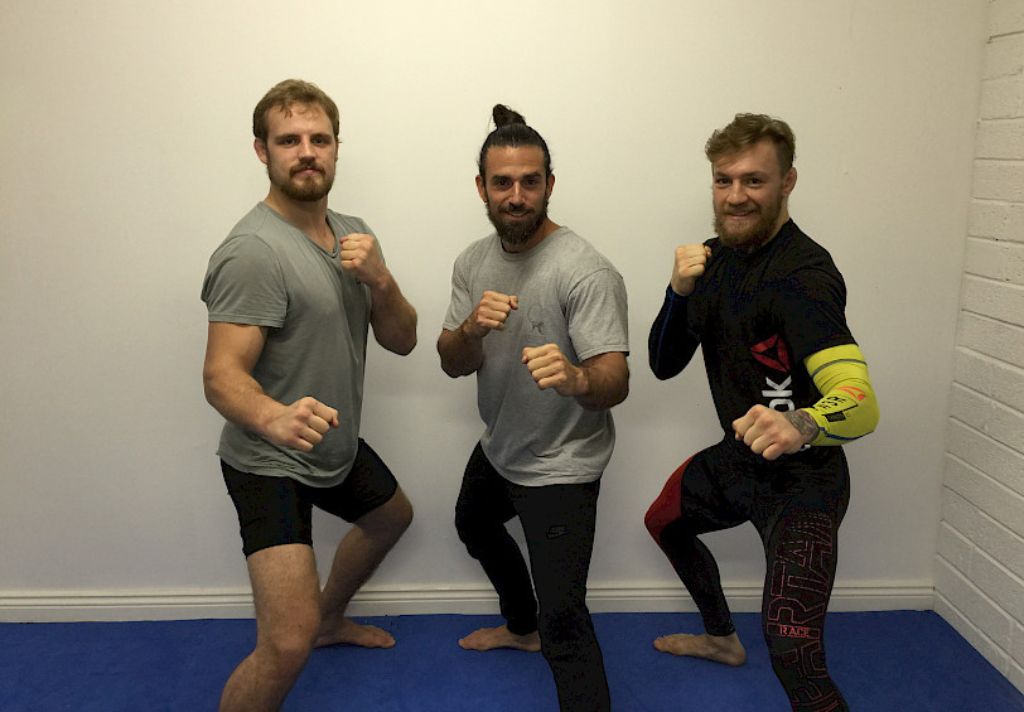
In 2012, Ido Portal’s philosophy gained mainstream recognition through his collaboration with MMA superstar Conor McGregor. McGregor, known for his agility, precision and explosive power, sought Ido’s expertise to refine his movement efficiency. Their training, which emphasized mobility, reaction drills, and unconventional movement patterns, contributed to McGregor’s legendary 13-second knockout of José Aldo. This partnership showcased how Movement Culture enhances combat sports by fostering freedom of movement, adaptability, and unpredictability
Link to YouTube video Movement Culture - Ido Portal
Link to YouTube video Conor McGregor - Gunnar Nelson - Ido Portal Movement Training UFC194
From Strength Training to a Refined Movement Philosophy
Initially, Ido Portal's teachings focused heavily on raw strength and physicality, catering to what people wanted at the time.
Link to YouTube video The Cruel Tutelage of Ido Portal
However, as a practitioner himself, Ido has always “talked the talk and walked the walk”, meaning that he has always been moving, researching and exploring more than his students. Over time, his philosophy deepened, emphasizing movement as a means of personal growth and self-expression. Gradually, more and more of the core principles of his ideas started to manifest in his teachings.
Some of his most known concepts, now widely used by several movement teachers, are:
- Generalisation vs. Specialisation – the rejection of the compartmentalization of physical training. We are human first, movers second and only then specialists.
- The craftsman’s approach – Movement is not about reaching a final destination or becoming good at something, but a continuous journey of refinement and self-discovery.
- Cross-Disciplinary Learning – Fighters can learn from dancers, and yogis can benefit from strength training. By sharing knowledge across disciplines, Movement Culture fosters an all-rounded physicality.
- Isolation, integration, improvisation – Master individual patterns; learn how to integrate them into specific sequences; and when you acquired a wide movement vocabulary, you can improvise freely with the patterns.
- The Spinal Engine - “You are as old as your spine”. #everydayisspineday was a hashtag promoting the importance of the spine as the centre of our movement
- Live life more dynamically. Move more – We are not designed to sit all day and move 45 minutes a day, three times a week, inside a gym. The human body is designed to move often and in varied ways
- “Let them dirty the walls!” – a metaphor and a reminder to not stop people from moving, playing and discovering.
- Movement is life – True mastery of movement involves not just the body but the whole self (mind, emotions, sensations).
Final Thoughts
Movement Culture is more than just a fitness trend; it’s a fundamental shift in how we approach physicality. As Ido Portal teaches, movement extends beyond any single discipline. By adopting a broader perspective on training and embracing interdisciplinary learning, we can unlock our full potential.
Whether you’re an athlete, a dancer, or simply someone looking to move better and feel better, the Movement Culture invites you to break free from traditional boundaries and explore the endless possibilities of human movement.
More about Ido Portal and the Movement Culture
Everything we shared so far is a brief presentation of a person and a practice we take so much from. If you want to explore further and know more:
Link to YouTube video Ido Portal documentary – Just move
Link to YouTube video Ido Portal: The Science & Practice of Movement | Huberman Lab Podcast #77
